
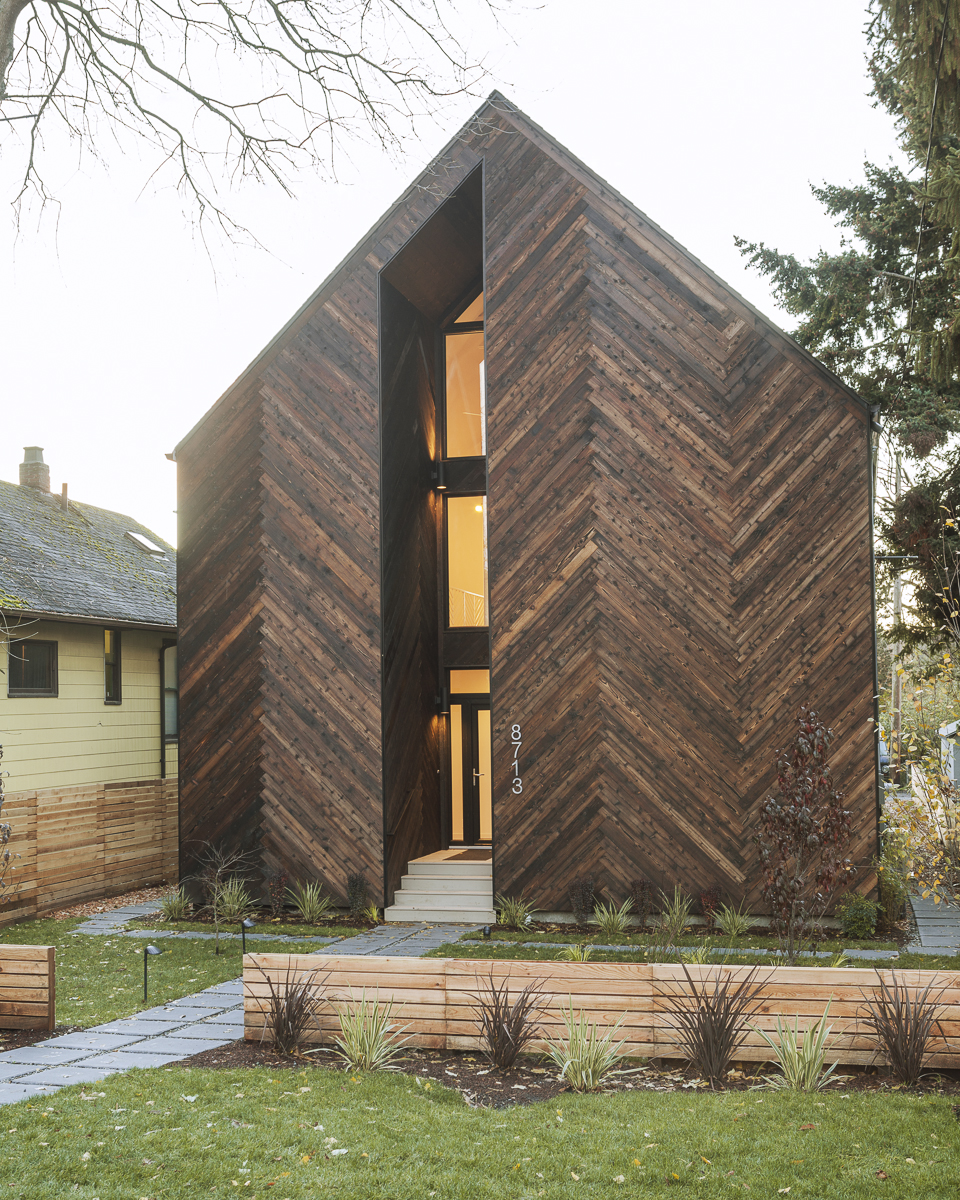
I love the idea of using a charred black cedar on some of our garden rooms. I think it looks so dramatic, especially if used with a few accents of regular cedar. But not only does it look stunning, charring cedar cladding also has some real benefits for the timbers longevity and resistance to elements and nature.
In this article by Lloyd Alter for Treehugger we can see just how the process is done, both in a traditional and quite frankly a ‘don’t try this at home’ sort of way and also a modern way using a blow torch. Not so traditional, but a lot safer.

Shou Sugi Ban. This is a traditional Japanese method of preserving cedar, where it is burned enough to create a layer of char on the outside. The char serves a number of functions: it seals and preserves the wood, it makes it significantly more fire-resistant, and termites and bugs hate it. According to Charred Wood, a supplier of Shou sugi ban, it can last 80 to 100 years without maintenance, and much longer if it is refinished with oil every 10 to 15 years. They call it “a natural, non-toxic way to preserve wood;” although its manufacture does involve fossil fuels in the modern method of manufacture and a lot of particulates in the traditional technique.
This is how it is made in Japan, no fossil fuels required, but a lot slower.
At the Palantine Passive House designed by Tiffany Bowie of Malboeuf Bowie Architecture, they torched the wood themselves, and then wire brushed it and oiled it. The job took far longer than they expected but the results were quite beautiful.

At the View Haus 5, a townhouse development designed by B9 Architects for builder/developer Cascade Built, the wood is used as an architectural highlight material. I really liked its use here in the courtyard.
In each case they were used differently and had a totally different effect; vertical on one, diagonal on another, the third horizontal. but all three take advantage of its great benefits: It’s natural, sustainable, renewable and beautiful. I hope we see a lot more of it.

Leave a Reply